
If you’re searching for an honest Brain Training for Dogs review, you’re likely wondering one thing: does this program actually work, or is it just another overhyped dog training course? With so many online training programs promising fast results, it’s important to separate real value from marketing claims—especially when your dog’s behavior and well-being are on the line.
Created by Adrienne Farricelli, Brain Training for Dogs takes a unique approach by focusing on mental stimulation and positive reinforcement rather than punishment or outdated dominance techniques. The program claims to fix common issues like barking, chewing, digging, and hyperactivity by tapping into your dog’s natural intelligence.
But does it really deliver results?
In this in-depth Brain Training for Dogs review, we’ll break down everything you need to know—including how the program works, its pros and cons, real customer feedback, pricing, and whether it’s truly worth your investment. By the end, you’ll have a clear answer on whether Brain Training for Dogs is the right solution for you and your dog.
Want to see exactly what the program includes?
Explore the training games, step-by-step lessons, and member bonuses before deciding whether it is right for your dog.
Visit the Official Brain Training for Dogs Website →
What is Brain Training for Dogs?

Brain Training for Dogs is a structured, science-based online dog training program developed by Adrienne Farricelli. Unlike traditional training methods that rely heavily on repetition and physical commands, this program focuses on strengthening your dog’s mind to naturally improve behavior.
At its core, the program uses force-free, positive reinforcement techniques to address common behavioral issues such as excessive barking, destructive chewing, digging, hyperactivity, and jumping. Instead of punishing unwanted behavior, it teaches dogs how to think, learn, and make better decisions on their own.
The training is delivered through step-by-step modules and interactive brain games that gradually increase in difficulty. These activities are designed to engage your dog mentally while building obedience, focus, and emotional control.
🧠 Core Philosophy: Neuroplasticity
What makes Brain Training for Dogs unique is its foundation in the scientific concept of Neuroplasticity.
This principle suggests that a dog’s brain is not fixed—it can be trained, shaped, and strengthened over time through consistent mental stimulation.
👉 In simple terms:
A mentally engaged dog is a well-behaved dog.
Adrienne Farricelli emphasizes that many behavioral problems are not caused by stubbornness or disobedience—but by boredom, lack of stimulation, and unused mental energy.
By incorporating brain games and problem-solving exercises into daily routines, the program helps dogs:
- Improve focus and impulse control
- Reduce anxiety and destructive behavior
- Become more responsive to commands
- Develop confidence and emotional balance
Why This Approach Works
Traditional training often tries to suppress bad behavior. Brain Training for Dogs takes a smarter route—it replaces unwanted behaviors by fulfilling your dog’s natural need to think and learn.
When dogs are mentally stimulated:
- They get tired in a healthy, productive way
- They are less likely to engage in destructive habits
- They become calmer and easier to manage
In short, this program doesn’t just train your dog—it transforms how your dog thinks, leading to long-term, lasting results.
Turn Boredom Into Better Behavior
If barking, chewing, jumping, or poor focus is making life with your dog stressful, Brain Training for Dogs gives you a positive, structured plan you can begin at home.
Unlock the Brain Training Games →
One-time payment • Lifetime access • Force-free methods
How Does Brain Training for Dogs Work?

Brain Training for Dogs works by guiding your dog through a step-by-step mental development system, much like a school curriculum. Instead of overwhelming your dog with advanced commands, the program introduces 21 structured brain games that gradually increase in difficulty—helping your dog build confidence, focus, and intelligence over time.
Each level is designed to sharpen specific mental and behavioral skills, ensuring steady progress without frustration.
🏫 Course Structure: The 7 Training Modules
The program is divided into seven progressive levels, each building on the previous one:
🎓 Preschool – Building the Foundation
This beginner stage focuses on attention, engagement, and basic communication between you and your dog.
Simple games like the Airplane Game teach your dog to make eye contact, follow your lead, and stay focused.
🧩 Elementary School – Awakening the Senses
Here, your dog begins using their natural instincts, such as sniffing and searching.
Games like Treasure Hunt and the Muffin Game improve problem-solving and encourage curiosity.
⚖️ High School – Developing Self-Control
At this level, the focus shifts to impulse control and emotional regulation.
Exercises like Jazz Up and Settle Down teach your dog when to be excited—and when to relax.
🎯 College – Sharpening Focus and Coordination
Your dog now works on concentration and physical coordination.
Activities such as the Shell Game challenge your dog to think critically while refining motor skills.
🧠 University – Real-Life Discipline
This stage introduces advanced problem-solving and practical obedience.
Games like Hide and Seek simulate real-world scenarios, helping your dog become more disciplined and responsive.
🐾 Graduation – Advanced Skills & Communication
Your dog learns more complex physical movements and commands, such as leg weaving and recognizing the names of objects—boosting both intelligence and communication.
🧪 Einstein – Mastery Level
This is the final stage, where your dog reaches peak mental performance.
Here, dogs can perform impressive, high-level tricks like stacking rings, cleaning up toys, or even mimicking actions like “playing the piano.”
Why This System Is So Effective
The genius of this structure is its progressive learning approach. Each level:
- Builds on previously learned skills
- Keeps your dog mentally stimulated and motivated
- Prevents boredom and frustration
- Encourages faster, long-lasting behavioral improvements
By the time your dog reaches the final stages, they’re not just obedient—they’re mentally sharp, emotionally balanced, and highly responsive.
Ready to start at the appropriate level for your dog?
Get immediate access to all seven training modules and progress through them at your dog’s own pace.
Get Brain Training for Dogs Now →
Pros of Brain Training for Dogs
🌟 Key Benefits of the Program
Brain Training for Dogs stands out because it goes beyond basic obedience—it focuses on developing your dog’s mind, behavior, and relationship with you. Here are the biggest advantages:
🧠 Mental Stimulation & Smarter Behavior
- Eliminates Boredom: Many common issues like chewing, barking, and digging are often caused by excess energy and lack of mental engagement. This program keeps your dog’s brain actively challenged.
- Progressive Learning System: With structured levels from beginner to advanced, your dog is constantly learning and improving—never stuck doing repetitive, boring tasks.
- Encourages Independent Thinking: Instead of just following commands, your dog learns how to solve problems and make better choices, leading to lasting behavioral improvements.
🤝 Strengthens the Human–Dog Bond
- Interactive, Game-Based Training: The program emphasizes fun activities you do with your dog, turning training into a shared experience rather than a chore.
- Positive Reinforcement Only: Reward-based methods build trust, confidence, and emotional connection—no fear or punishment involved.
- Shared Wins: Completing challenges together creates a powerful positive feedback loop, making your dog more eager to learn and engage with you.
🐾 Gentle, Ethical & Science-Backed Approach
- 100% Force-Free Training: No shock collars, choke chains, or outdated dominance techniques—just humane, effective methods.
- Expert-Led Program: Created by Adrienne Farricelli, ensuring professional, reliable guidance.
- Suitable for All Dogs: Whether you have a playful puppy, an adult dog with behavioral issues, or a senior dog, the program can be adapted to fit their needs and abilities.
💰 Accessibility & Long-Term Value
- One-Time Payment, Lifetime Access: You get full access to all modules, updates, and materials without recurring fees.
- Extensive Training Library: Includes a wide range of guides and articles targeting specific behavioral problems.
- Supportive Community: Access to a private forum where you can connect with other dog owners, share experiences, and get help when needed.
Cons of Brain Training for Dogs
While Brain Training for Dogs offers a powerful and science-based approach, it’s not perfect for everyone. Most of the drawbacks relate to its digital format, required commitment, and limitations with serious behavioral issues.
📉 Key Cons and Criticisms
- Digital-Only Program
All materials are delivered online—there’s no physical book or DVD included. This may be inconvenient for users who prefer printed guides or have unreliable internet access. - Requires Time & Consistency
This is not a “quick fix” solution. To see results, you’ll need to commit to daily training sessions (around 10–15 minutes). Noticeable improvements typically take 4–6 weeks, depending on your dog and consistency. - Not Suitable for Severe Behavioral Issues
While effective for common problems like barking or jumping, the program is not designed for dogs with serious aggression, trauma, or bite history. In such cases, working with a professional trainer in person is often necessary. - Upsells After Purchase
After buying the core program, you may encounter optional “One-Time Offers” (OTOs) for additional training content. Some users find this marketing approach a bit pushy. - Requires Simple Training Props
Certain games use everyday household items like muffin tins, cups, or bottles. While inexpensive, you may need to gather these items before completing some exercises. - Inconsistent Video Quality
A few modules feature older or lower-quality video content, which can feel less polished compared to newer sections. - May Feel Too Basic at First
Experienced dog owners might find the early stages (like the “Preschool” level) overly simple or repetitive—but these foundations are important for long-term success.
👍 Best For
- Dog owners who want to bond through fun, interactive training
- Dogs with boredom-related behaviors (chewing, barking, jumping)
- Mild anxiety or lack of focus
- Users comfortable with online videos and downloadable PDFs
👎 Not Ideal For
- Those looking for a fast, “set-it-and-forget-it” solution
- Dogs with severe aggression or a history of biting
- Users who prefer physical books or offline training materials
⚖️ Bottom Line
Brain Training for Dogs is highly effective—but only if you’re willing to put in consistent time and effort. It’s best viewed as a guided training system, not an instant fix.
Is It a Good Fit for You and Your Dog?
If you can set aside 10–15 minutes a day and prefer reward-based training, this program offers an affordable way to address common behavior problems while strengthening your bond.
See Everything Included in the Program →
Visit the official website for current pricing, bonuses, and refund terms.
⭐ Customer Reviews and Ratings
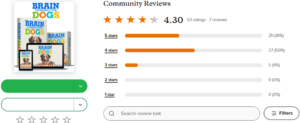
When evaluating Brain Training for Dogs, it’s helpful to look at feedback from independent platforms. While the number of reviews varies, the overall sentiment is generally positive.
- Trustpilot: 3.7 out of 5 stars (based on limited feedback)
- Goodreads: 4.3 out of 5 stars (based on 50+ reviews)
💡 What This Means:
The higher rating on Goodreads suggests that many users who actively used or studied the program found it valuable and effective. However, the smaller number of reviews on Trustpilot means there’s less data available from that platform.
Overall, most customers report improvements in their dog’s behavior, especially when they follow the program consistently.
🐶 Brain Training for Dogs vs K9 Training Institute (2026 Comparison)
✅ Is Brain Training for Dogs Legit?
Yes — Brain Training for Dogs is generally considered legit, not a scam. But (and this is important), whether it works for you depends heavily on your expectations and consistency.
✔️ Why It’s Legit
- Created by a certified professional
The program was developed by Adrienne Farricelli, a recognized credential in the dog training industry. - Science-based training approach
It uses positive reinforcement and mental stimulation techniques rather than punishment or dominance methods. - Structured and progressive system
The course follows a step-by-step format (like school levels), helping dogs gradually improve focus, behavior, and problem-solving skills. - Positive user feedback overall
Many users report improved obedience, better focus, and stronger bonding with their dogs after consistent use. - Backed by a refund policy
The program typically includes a money-back guarantee, which reduces the risk for buyers.
⚠️ Why Some People Doubt It
Even though it’s legit, not everyone is impressed:
- It’s not a “magic fix”
Results require daily effort and consistency—no instant transformation. - Mixed opinions online
Some users (especially on forums like Reddit) question its effectiveness or expected faster results. - Digital product skepticism
Because it’s an online course, some people initially assume it could be “just another internet program.”
🎯 Final Verdict
👉 Legit? Yes.
👉 Guaranteed to work instantly? No.
Brain Training for Dogs is a real, science-based training program that has helped many dog owners—but it works best if you:
- Follow the program consistently
- Spend at least 10–15 minutes daily
- Use it for general behavior issues (not severe aggression)
If you’re looking for a safe, positive, and structured way to train your dog at home, Brain Training for Dogs is a legitimate option.
Try Brain Training for Dogs Through the Official Website →
But if you want a quick, effortless solution, this isn’t it.
🐾 Conclusion: Brain Training for Dogs Review
After a thorough evaluation, Brain Training for Dogs proves to be a legitimate and effective training program—especially for dog owners who want a gentle, science-based alternative to traditional obedience methods.
Created by Adrienne Farricelli, the program stands out by focusing on mental stimulation, positive reinforcement, and structured progression rather than punishment or force. This approach not only helps correct common behavioral issues like barking, chewing, and jumping—but also builds a stronger bond between you and your dog.
That said, it’s important to set realistic expectations. This is not a quick fix. Your results will depend on consistency, patience, and daily engagement. If you’re willing to invest just 10–15 minutes a day, most users report noticeable improvements within a few weeks.
✔️ Who Should Buy It?
- Dog owners dealing with boredom-related behaviors
- Anyone who prefers force-free, reward-based training
- Owners who want to mentally stimulate and engage their dog
❌ Who Should Skip It?
- Those looking for an instant, hands-off solution
- Dogs with severe aggression or complex behavioral issues (better handled by in-person professionals)
⭐ Final Rating: 4.5 / 5
👉 Bottom line: If you’re looking for a proven, affordable, and engaging dog training system, Brain Training for Dogs is absolutely worth considering. It’s not just about teaching commands—it’s about unlocking your dog’s full potential.
💡 Recommendation: Start with the program, stay consistent, and you’ll likely see meaningful, long-term improvements in your dog’s behavior and focus.
Help Your Dog Become Calmer, Smarter, and More Responsive
Get the complete step-by-step system, 21 brain games, behavior guidance, video demonstrations, and member resources in one program you can follow from home.
Start Brain Training for Dogs Today →
❓ Frequently Asked Questions
💰 How much does Brain Training for Dogs cost?
Brain Training for Dogs is available for a one-time payment (usually around $47), giving you lifetime access to the full program—no subscriptions or recurring fees.
Here’s what you get:
- 📘 Main Training Guide: A comprehensive 380-page eBook with step-by-step instructions and visuals
- 📗 Behavior Training Guide: A 90-page companion focused on fixing issues like digging, barking, and whining
- 🎥 Video Demonstrations: Easy-to-follow clips of Adrienne Farricelli performing each exercise
- 📚 Bonus Content Library: Access to 100+ articles covering a wide range of dog training topics
- 👥 Private Member Forum: A supportive community where you can ask questions and get guidance
💡 Bottom line: It’s a one-time investment with long-term value, especially compared to ongoing professional training sessions.
🐶 What annoys dogs the most?
Dogs can become stressed or irritated by certain situations, especially when they feel unsafe or overwhelmed. Common triggers include:
- Loud noises: Thunderstorms, fireworks, and vacuum cleaners
- Being left alone too long: Can lead to anxiety and destructive behavior
- Invasion of personal space: Tight hugs, staring directly into their eyes, or looming over them
- Strong smells: Citrus, ammonia, vinegar, and other sharp scents
- Forced interactions: Being pushed into unfamiliar or uncomfortable situations
Understanding these triggers can help you create a calmer, more positive environment for your dog.
🐕 What’s the most disobedient dog?
There’s no such thing as a “bad” dog—but some breeds are known for being more independent, stubborn, or strong-willed, which can make training more challenging.
Examples often cited include:
- Afghan Hound – Highly independent and less eager to please
- Basenji – Intelligent but notoriously stubborn
- Chow Chow – Aloof and strong-minded
- Bulldog – Can be slow to respond and stubborn
- Beagle – Easily distracted due to strong scent instincts
💡 Important: Behavior depends more on training, environment, and consistency than breed alone. Even the most stubborn dogs can become well-behaved with the right approach—especially with mentally engaging programs like Brain Training for Dogs.
🧠 How long does it take to see results?
Most dog owners begin noticing improvements within 2–4 weeks, with more significant changes appearing after 4–6 weeks of consistent daily practice.
🐾 Is this program suitable for puppies and older dogs?
Yes! The program is designed to work for all ages and breeds. Exercises can be easily adjusted for:
- Energetic puppies
- Adult dogs with behavioral issues
- Senior dogs with lower mobility
📱 Do I need any special equipment?
No expensive tools are required. Most games use common household items like cups, treats, or toys—making it affordable and easy to follow at home.